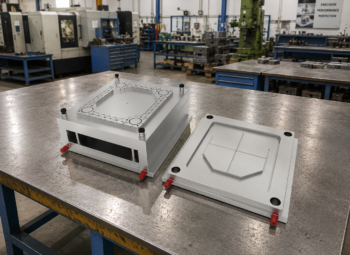


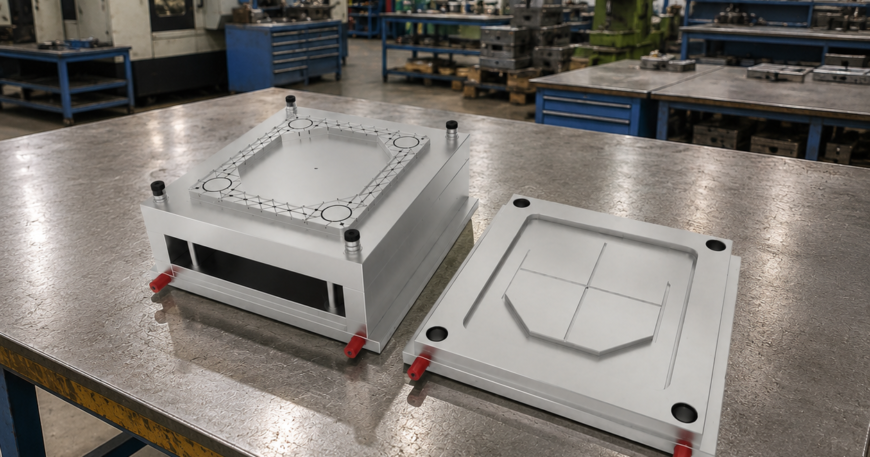
In modern manufacturing, plastic injection moulds play a critical role in determining production speed, product quality, consistency, and overall operating costs. A high-quality plastic mould is more than a tool used to shape plastic. It is an important part of the entire manufacturing process, influencing cycle time, material consumption, maintenance requirements, product accuracy, and production efficiency.
For industries such as automotive, electronics, medical equipment, packaging, consumer goods, and industrial components, choosing the right plastic mould manufacturer can have a significant impact on long-term production performance. A well-designed and precisely manufactured mould can produce thousands or even millions of consistent components while reducing defects, downtime, and unnecessary production expenses.
This article explains how high-quality plastic moulds improve manufacturing efficiency, why mould quality matters, and what manufacturers should consider when selecting an injection moulding solution.
What Is a High-Quality Plastic Mould?
A high-quality plastic mould is a precision-engineered tool designed to produce plastic components accurately, consistently, and efficiently. It is manufactured using suitable materials, advanced machining technologies, accurate mould design, and carefully engineered cooling and ejection systems.
A quality mould generally includes:
- Precise cavity and core machining
- Efficient cooling channels
- Properly designed runner and gate systems
- Reliable ejection mechanisms
- High-quality mould steel or suitable tooling materials
- Accurate dimensional tolerances
- Proper surface finishing
- Durable components designed for repeated production
The objective is not simply to manufacture a mould but to create a tool that can deliver stable production performance over its expected service life.
Improved Product Quality and Consistency
One of the biggest advantages of a high-quality plastic mould is improved product consistency.
Precision moulds maintain accurate cavity dimensions during repeated injection cycles. This helps manufacturers produce components with consistent dimensions, shapes, surface finishes, and overall appearance.
Poor-quality moulds can result in issues such as:
- Dimensional variation
- Flash
- Short shots
- Sink marks
- Warpage
- Uneven surfaces
- Parting-line defects
When these problems occur repeatedly, manufacturers may experience higher rejection rates and additional inspection or rework costs.
A properly engineered mould helps maintain consistent production quality, which is especially important for industries where components must meet strict dimensional and performance requirements.
Faster Production Cycles
Injection moulding cycle time has a direct impact on manufacturing productivity. The faster a manufacturer can produce acceptable-quality parts, the greater the potential production output.
High-quality moulds can improve cycle efficiency through properly designed cooling systems, optimised material flow, and effective ejection mechanisms.
Cooling is particularly important because plastic often needs to solidify sufficiently before the component can be safely ejected. Efficient cooling can reduce unnecessary waiting time between injection and ejection.
For high-volume production, even a small reduction in cycle time can create a significant improvement in total output.
For example, reducing a production cycle by only a few seconds can result in thousands of additional components over a long production run, depending on machine utilisation and production schedules.
Reduced Material Waste
A well-designed mould can also contribute to better material utilisation.
Gate location, runner design, cavity balance, wall thickness, and product geometry all influence how plastic flows through the mould. Proper design can help reduce common defects and unnecessary material consumption.
When a mould produces fewer defective components, manufacturers naturally use less material for rejected parts.
Advanced mould designs may also incorporate optimised runner systems or hot runner technology where appropriate. These technologies can reduce material waste associated with conventional cold runners in suitable applications.
Reducing material waste can lower production costs while also supporting more sustainable manufacturing practices.
Lower Maintenance and Downtime
Manufacturing downtime can be expensive, particularly in high-volume injection moulding operations.
Low-quality moulds may require frequent repairs because of poor component selection, inadequate cooling, improper alignment, premature wear, or insufficient manufacturing precision.
High-quality moulds are designed with durability and maintainability in mind.
Important considerations include:
- Durable mould components
- Proper alignment
- Replaceable wear components
- Accessible cooling channels
- Reliable ejection systems
- Appropriate steel selection
- Correct surface treatment where required
A well-maintained, high-quality mould can operate reliably for longer periods, reducing unexpected interruptions and helping manufacturers maintain production schedules.
Better Machine Utilisation
The performance of the mould directly affects how effectively an injection moulding machine can be used.
If a mould requires frequent adjustments or produces inconsistent parts, machine time can be wasted on troubleshooting, testing, and quality checks.
A precision mould allows the machine to operate with stable process parameters.
This can improve:
Machine availability + cycle consistency + product quality = better overall manufacturing efficiency
Manufacturers can therefore get more productive output from their existing injection moulding equipment without necessarily increasing the number of machines.
Improved Cooling Performance
Cooling is one of the most important factors in injection moulding efficiency.
Traditional cooling channels may not always provide uniform cooling for complex plastic components. Uneven cooling can contribute to warpage, dimensional variation, and longer cycle times.
High-quality mould manufacturers carefully design cooling systems according to the geometry and thermal requirements of the component.
Advanced moulds may use optimised or conformal cooling channels that can provide more uniform heat removal in complex applications.
Better cooling can help achieve:
- Shorter cycle times
- Improved dimensional stability
- Reduced warpage
- Better surface quality
- More consistent production
This makes cooling-system design an important consideration when evaluating a plastic injection mould.
Reduced Rejection and Rework Costs
Every rejected plastic component represents wasted material, machine time, labour, and energy.
If a mould consistently produces defective parts, manufacturers may need to increase inspection, rework components, adjust machine settings, or stop production for troubleshooting.
A high-quality mould reduces the likelihood of recurring mould-related defects by providing accurate cavity geometry, balanced material flow, appropriate venting, and reliable ejection.
Lower rejection rates improve overall production efficiency and help manufacturers achieve more predictable manufacturing costs.
Longer Mould Life and Better Return on Investment
A plastic mould is a long-term manufacturing asset. Although a high-quality mould may require a greater initial investment, its total cost should be evaluated over its entire production life.
A durable mould can provide:
- Longer service life
- Fewer repairs
- Lower maintenance costs
- Consistent part quality
- Reduced downtime
- Better production output
This means manufacturers should not select a mould solely on its initial price.
A cheaper mould that requires frequent maintenance or produces high rejection rates can ultimately become more expensive than a properly engineered, durable mould.
The total cost of ownership is therefore an important factor when choosing a mould manufacturer.
Supports Automation
Modern manufacturing is increasingly adopting robotics and automated production systems.
High-quality moulds are better suited to automated production because they can provide consistent part dimensions and predictable ejection performance.
Robotic systems can be used for:
- Part removal
- Component handling
- Inspection
- Sorting
- Assembly
- Packaging
When mould performance is stable, automation can operate more reliably with fewer interruptions.
This makes precision mould manufacturing an important foundation for modern automated injection moulding facilities.
Better Support for Complex Product Designs
Modern products often require complex geometries, thin walls, intricate details, undercuts, textures, and tight dimensional tolerances.
High-quality mould manufacturing allows engineers to develop tooling capable of producing these complex components accurately.
Advanced CAD/CAM software, mould-flow analysis, CNC machining, EDM, precision measurement, and simulation technologies can be used during mould development.
These technologies allow potential manufacturing problems to be identified earlier, reducing expensive modifications after mould production.
How to Choose a High-Quality Plastic Mould Manufacturer
Choosing the right mould manufacturer is just as important as choosing the right mould design.
Before selecting a supplier, manufacturers should consider:
Experience and Technical Expertise
Look for a manufacturer with experience in your product type, plastic material, mould complexity, and required production volume.
Manufacturing Capabilities
Check whether the manufacturer has access to modern CNC machining, EDM, inspection equipment, CAD/CAM systems, and mould-flow analysis.
Material and Steel Selection
The mould material should be selected according to expected production volume, plastic material, operating conditions, and required mould life.
Quality Control
A reliable manufacturer should have proper inspection and quality-control procedures throughout mould manufacturing.
After-Sales Support
Technical support, maintenance guidance, spare parts, and mould repair services can be valuable throughout the mould’s operating life.
Why High-Quality Plastic Moulds Matter for Manufacturers in India
India’s manufacturing sector is expanding across automotive components, consumer products, electronics, packaging, medical products, and industrial applications. As competition increases, manufacturers need to improve productivity while maintaining consistent quality and controlling production costs.
For Indian manufacturers, investing in high-quality plastic injection moulds can support higher production efficiency, reduced rejection rates, and more reliable manufacturing operations.
Working with an experienced plastic mould manufacturer in India can also provide advantages related to communication, technical support, customisation, maintenance, and production requirements.
The right supplier can help businesses select an appropriate mould design based on their product, material, production volume, budget, and expected service life.
cific production requirements.