
Plastic injection moulding is one of the most widely used manufacturing processes for producing high-volume plastic components with consistent quality, accuracy, and repeatability. From automotive components and medical devices to consumer products, electrical parts, packaging, and industrial components, injection moulding plays an important role across modern manufacturing industries.
The process involves melting plastic resin and injecting it into a specially designed mould under controlled pressure. Once the molten plastic cools and solidifies, the finished component is removed from the mould. With advanced machinery, precision moulds, and suitable material selection, manufacturers can produce complex plastic parts efficiently and economically.
In this guide, we will explain the plastic injection moulding process, its major benefits, common applications, suitable materials, and important factors to consider when choosing an injection moulding manufacturer.
What Is Plastic Injection Moulding?
Plastic injection moulding is a manufacturing process used to create plastic products and components by injecting molten plastic material into a mould cavity.
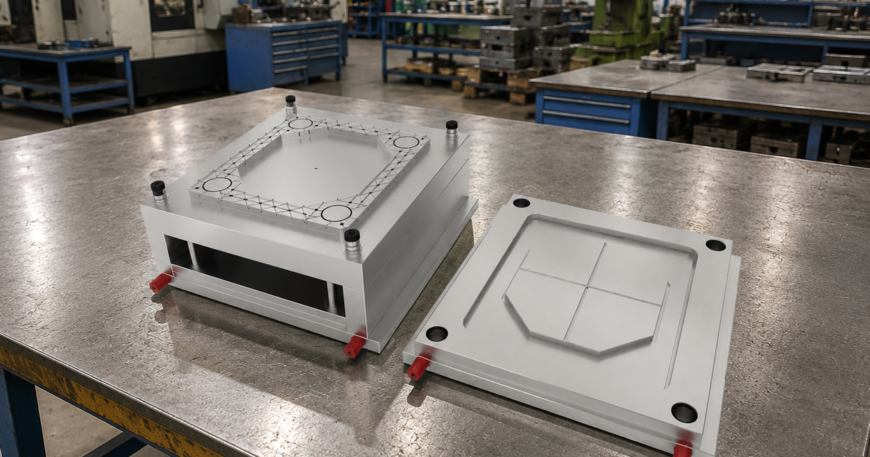
The mould determines the shape, dimensions, surface finish, and overall design of the finished product. After injection, the plastic cools and becomes solid. The mould then opens, and the component is ejected.
This process is particularly suitable for mass production of plastic components because the same mould can be used repeatedly to manufacture thousands or even millions of identical parts.
Plastic injection moulding can produce simple components as well as highly complex parts with:
- Precise dimensions
- Detailed geometries
- Thin walls
- Textured surfaces
- Ribs and bosses
- Threads and inserts
- Multiple design features
How Does the Plastic Injection Moulding Process Work?
The injection moulding process consists of several important stages. Each stage must be carefully controlled to achieve consistent product quality.
1. Material Selection
The first step is selecting the appropriate plastic material based on the product’s requirements.
Common injection moulding materials include:
- ABS
- Polypropylene (PP)
- Polyethylene (PE)
- Polycarbonate (PC)
- Nylon (PA)
- PVC
- POM (Acetal)
- Polystyrene (PS)
- TPE and TPU
Material selection depends on factors such as strength, flexibility, temperature resistance, chemical resistance, appearance, and application requirements.
2. Plastic Melting
Plastic pellets or granules are fed into the injection moulding machine through a hopper. The material moves into a heated barrel where controlled temperatures melt the plastic.
A rotating screw mixes and pushes the molten plastic forward while maintaining the required temperature and material consistency.
3. Injection
Once the required amount of molten plastic is prepared, the screw moves forward and injects the material into the mould cavity under high pressure.
Injection speed and pressure are important because they influence how completely the mould cavity is filled and can affect the final product’s appearance and dimensions.
4. Holding and Packing
After the mould cavity is filled, additional pressure is applied for a specific period.
This stage, commonly called holding or packing, compensates for material shrinkage as the plastic begins to cool. Correct pressure and timing help maintain dimensional accuracy and reduce defects such as sink marks and voids.
5. Cooling
The injected plastic remains inside the mould while it cools and solidifies.
Cooling channels inside the mould help control temperature and improve cycle efficiency. Proper cooling is essential because uneven or insufficient cooling can result in warping, shrinkage, or dimensional variation.
6. Mould Opening and Ejection
After the component has sufficiently cooled, the mould opens. Ejector pins or other ejection mechanisms push the finished part out of the mould.
The mould then closes again, and the cycle repeats.
This automated cycle makes injection moulding highly suitable for large-scale manufacturing.
Key Benefits of Plastic Injection Moulding
Plastic injection moulding offers several advantages over other manufacturing methods.
High Production Efficiency
Injection moulding machines can produce components rapidly with relatively short cycle times. Once the moulding process has been properly developed and optimized, production can continue with minimal manual intervention.
Excellent Repeatability
One of the biggest advantages of injection moulding is consistency. A properly designed mould and controlled process can produce large quantities of components with nearly identical dimensions and appearance.
This is especially important for industries such as automotive, medical, electronics, and engineering.
Cost-Effective Mass Production
Although designing and manufacturing an injection mould requires an initial investment, the cost per component can become significantly lower when production volumes are high.
This makes injection moulding an attractive option for businesses requiring large quantities of plastic parts.
Complex Designs
Injection moulding can manufacture components with complex shapes and detailed features that may be difficult or expensive to produce using traditional manufacturing methods.
Design elements such as ribs, clips, grooves, bosses, and curved surfaces can be incorporated into a single component.
Reduced Material Waste
Modern injection moulding systems can achieve efficient material utilization. Depending on the design and material, runners and other production waste may also be recyclable or reusable.
Wide Material Selection
Manufacturers can choose from a broad range of thermoplastics and engineering plastics according to the application’s requirements.
This flexibility allows injection moulding to serve industries with very different performance requirements.
Automation and Scalability
Modern injection moulding machines can be integrated with automation systems, robotic part removal, quality inspection, material handling, and packaging.
This helps manufacturers improve productivity while reducing manual handling.
Common Applications of Plastic Injection Moulding
Plastic injection moulding is used across a wide range of industries.
Automotive Industry
The automotive sector uses injection-moulded components for:
- Interior trim parts
- Dashboard components
- Switches and controls
- Door components
- Clips and fasteners
- Engine-related plastic components
- Lighting components
The process helps manufacturers produce lightweight, durable, and highly repeatable components.
Medical and Healthcare
Injection moulding is widely used for medical and healthcare products where precision and consistency are essential.
Applications include:
- Medical device components
- Syringe components
- Diagnostic equipment parts
- Laboratory products
- Disposable healthcare products
- Housings and enclosures
Medical applications may require specialized materials, mould designs, clean manufacturing environments, and strict quality controls.
Consumer Products
Many everyday plastic products are manufactured using injection moulding, including:
- Household containers
- Kitchen accessories
- Toys
- Appliance components
- Storage products
- Personal care products
Electronics and Electrical Industry
Injection moulding is commonly used to manufacture:
- Electrical housings
- Switches
- Connectors
- Cable components
- Device enclosures
- Insulating components
Engineering plastics can provide the required strength, insulation, and heat resistance for specific applications.
Packaging Industry
Plastic injection moulding is also used for producing caps, closures, containers, and other packaging components.
High-speed production and repeatability make the process suitable for large-volume packaging requirements.
Industrial Products
Industrial applications include machine components, protective covers, handles, gears, fittings, brackets, and other engineered plastic parts.
Factors to Consider Before Injection Moulding
Choosing the right injection moulding process requires careful consideration of several factors.
Product Design
A component should be designed with injection moulding principles in mind. Wall thickness, draft angles, ribs, bosses, parting lines, and other features can affect mould performance and product quality.
Material Selection
The material should match the application’s mechanical, thermal, chemical, and environmental requirements.
Mould Design
A high-quality mould is essential for producing consistent components. The design should consider cooling, gating, ejection, cavity layout, and expected production volume.
Production Quantity
Injection moulding is particularly advantageous for medium- to high-volume production. The expected production quantity should be evaluated against the initial mould investment.
Quality Requirements
Manufacturers should establish acceptable dimensional tolerances, surface finish requirements, inspection procedures, and quality standards before production begins.
How to Choose a Plastic Injection Moulding Manufacturer
Selecting the right plastic injection moulding manufacturer can have a major impact on product quality, production cost, and delivery timelines.
Consider the manufacturer’s:
- Injection moulding machine capacity
- Experience with your industry
- Mould design and development capabilities
- Material expertise
- Quality control systems
- Production capacity
- Automation capabilities
- Engineering and technical support
- Prototyping capabilities
- Delivery and production planning
A reliable manufacturer should be able to support the project from product design and mould development through injection moulding, quality inspection, and final production.
Frequently Asked Questions About Plastic Injection Moulding
What is plastic injection moulding?
Plastic injection moulding is a manufacturing process in which molten plastic is injected into a mould cavity, cooled, solidified, and ejected to create a finished plastic component.
What plastics are commonly used in injection moulding?
Common materials include PP, ABS, PE, PC, nylon, PVC, POM, PS, TPE, and TPU. The ideal material depends on the product’s required properties and application.
Is injection moulding suitable for mass production?
Yes. Injection moulding is highly suitable for mass production because it offers fast cycle times, repeatable quality, automation capabilities, and lower per-unit costs at higher production volumes.
How long does an injection moulding cycle take?
Cycle time varies depending on the component design, material, mould, machine, and cooling requirements. Simple parts can have relatively short cycles, while larger or more complex components may require longer cooling and processing times.
What are the main advantages of injection moulding?
The major advantages include high production speed, excellent repeatability, complex design capabilities, material flexibility, automation, reduced waste, and cost-effective high-volume manufacturing.
What is the difference between injection moulding and 3D printing?
Injection moulding is generally better suited to medium- and high-volume production, while 3D printing is often useful for prototypes, customized parts, and low-volume manufacturing. The best option depends on product design, quantity, material, cost, and required production speed.
Conclusion
Plastic injection moulding is a reliable and versatile manufacturing technology that enables businesses to produce high-quality plastic components efficiently and consistently. Its ability to manufacture complex shapes, support a wide range of materials, integrate automation, and achieve economical high-volume production makes it an important solution for industries ranging from automotive and healthcare to electronics, packaging, consumer products, and industrial manufacturing.
For businesses planning a new plastic component, choosing the right material, mould design, machine capacity, and manufacturing partner is essential. A well-engineered injection moulding process can help improve product quality, reduce production costs, increase manufacturing efficiency, and support long-term scalability.
Whether you need prototypes, customized plastic components, or large-scale production, working with an experienced plastic injection moulding manufacturer can help turn your product design into a reliable, production-ready solution.